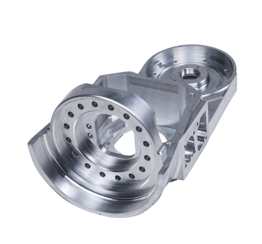
What are the technological processes during the operation of a CNC five-axis machining center?-10
IV. Post-processing and Maintenance
Inspect finished workpieces for dimensional accuracy, form tolerance and surface quality. Perform routine machine maintenance including cleaning, lubrication system check, and replacement of lubricating oil and coolant.
Record and analyze machining data such as processing time, cutting parameters and tool life to continuously optimize production efficiency and quality.
III. Formal Machining Process
Start and preheat the machine tool, check all components for normal operation. Set tools and fixtures as required by the program. The CNC system executes the NC program and drives 5-axis linkage (X, Y, Z linear axes + A/B/C rotary axes) to achieve 3D precision machining.
Real-time monitoring of tool position, cutting force and machining status ensures stable accuracy. The machine automatically completes tool changing operations including tool grabbing, exchanging and clamping as needed.
IV. Post-processing and Maintenance
Inspect finished workpieces for dimensional accuracy, form tolerance and surface quality. Perform routine machine maintenance including cleaning, lubrication system check, and replacement of lubricating oil and coolant.
Record and analyze machining data such as processing time, cutting parameters and tool life to continuously optimize production efficiency and quality.
II. Programming and Simulation
Generate CNC programs using professional CAD/CAM software according to design drawings, including axis motion paths and cutting parameters. Simulate tool paths to verify rationality and avoid collisions. Convert verified paths into NC programs and conduct further simulation to ensure correctness.
III. Formal Machining Process
Start and preheat the machine tool, check all components for normal operation. Set tools and fixtures as required by the program. The CNC system executes the NC program and drives 5-axis linkage (X, Y, Z linear axes + A/B/C rotary axes) to achieve 3D precision machining.
Real-time monitoring of tool position, cutting force and machining status ensures stable accuracy. The machine automatically completes tool changing operations including tool grabbing, exchanging and clamping as needed.
IV. Post-processing and Maintenance
Inspect finished workpieces for dimensional accuracy, form tolerance and surface quality. Perform routine machine maintenance including cleaning, lubrication system check, and replacement of lubricating oil and coolant.
Record and analyze machining data such as processing time, cutting parameters and tool life to continuously optimize production efficiency and quality.
I. Preparatory Work
Select suitable workpiece materials based on physical properties, machining difficulty and cost. Clamp and position the workpiece firmly on the worktable with high-precision fixtures to ensure machining accuracy. Choose proper cutting tools and fixtures according to part geometry, size and processing requirements.
II. Programming and Simulation
Generate CNC programs using professional CAD/CAM software according to design drawings, including axis motion paths and cutting parameters. Simulate tool paths to verify rationality and avoid collisions. Convert verified paths into NC programs and conduct further simulation to ensure correctness.
III. Formal Machining Process
Start and preheat the machine tool, check all components for normal operation. Set tools and fixtures as required by the program. The CNC system executes the NC program and drives 5-axis linkage (X, Y, Z linear axes + A/B/C rotary axes) to achieve 3D precision machining.
Real-time monitoring of tool position, cutting force and machining status ensures stable accuracy. The machine automatically completes tool changing operations including tool grabbing, exchanging and clamping as needed.
IV. Post-processing and Maintenance
Inspect finished workpieces for dimensional accuracy, form tolerance and surface quality. Perform routine machine maintenance including cleaning, lubrication system check, and replacement of lubricating oil and coolant.
Record and analyze machining data such as processing time, cutting parameters and tool life to continuously optimize production efficiency and quality.
Detailed Description: Technological Process of CNC Five-Axis Machining Center
The operation process of a CNC five-axis machining center is a precise and systematic procedure, including multiple key steps from workpiece preparation to final machining completion. The full workflow is analyzed in detail as follows:
I. Preparatory Work
Select suitable workpiece materials based on physical properties, machining difficulty and cost. Clamp and position the workpiece firmly on the worktable with high-precision fixtures to ensure machining accuracy. Choose proper cutting tools and fixtures according to part geometry, size and processing requirements.
II. Programming and Simulation
Generate CNC programs using professional CAD/CAM software according to design drawings, including axis motion paths and cutting parameters. Simulate tool paths to verify rationality and avoid collisions. Convert verified paths into NC programs and conduct further simulation to ensure correctness.
III. Formal Machining Process
Start and preheat the machine tool, check all components for normal operation. Set tools and fixtures as required by the program. The CNC system executes the NC program and drives 5-axis linkage (X, Y, Z linear axes + A/B/C rotary axes) to achieve 3D precision machining.
Real-time monitoring of tool position, cutting force and machining status ensures stable accuracy. The machine automatically completes tool changing operations including tool grabbing, exchanging and clamping as needed.
IV. Post-processing and Maintenance
Inspect finished workpieces for dimensional accuracy, form tolerance and surface quality. Perform routine machine maintenance including cleaning, lubrication system check, and replacement of lubricating oil and coolant.
Record and analyze machining data such as processing time, cutting parameters and tool life to continuously optimize production efficiency and quality.