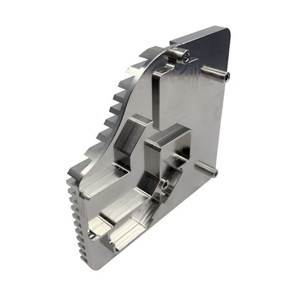
What are the processing characteristics of precision machining-8
Precision machining is closely integrated with mechanical design and manufacturing, directly determining product quality and performance. It supports evolutionary machining: using relatively lower-precision equipment to produce higher-precision workpieces through special processes and tooling.
Ultra-precision machining requires strict environments: constant temperature, vibration isolation and ultra-cleanliness. Workpiece materials must be uniform and defect-free. Precision measurement is also an essential prerequisite to verify and ensure final machining accuracy.
V. Other Core Characteristics
Precision machining is closely integrated with mechanical design and manufacturing, directly determining product quality and performance. It supports evolutionary machining: using relatively lower-precision equipment to produce higher-precision workpieces through special processes and tooling.
Ultra-precision machining requires strict environments: constant temperature, vibration isolation and ultra-cleanliness. Workpiece materials must be uniform and defect-free. Precision measurement is also an essential prerequisite to verify and ensure final machining accuracy.
IV. Eco-Friendly & Cost Effective
Advanced precision processing reduces material waste and pollutant emissions, supporting environmental protection and sustainable development. It maximizes the utilization of expensive materials and significantly lowers overall manufacturing costs.
V. Other Core Characteristics
Precision machining is closely integrated with mechanical design and manufacturing, directly determining product quality and performance. It supports evolutionary machining: using relatively lower-precision equipment to produce higher-precision workpieces through special processes and tooling.
Ultra-precision machining requires strict environments: constant temperature, vibration isolation and ultra-cleanliness. Workpiece materials must be uniform and defect-free. Precision measurement is also an essential prerequisite to verify and ensure final machining accuracy.
III. High Efficiency & Intelligence
Powered by CNC technology, automatic detection and intelligent systems, precision machining achieves high automation and optimized processing control, improving efficiency and reducing production costs. It supports fast turnaround with stable quality guaranteed by professional engineering teams.
IV. Eco-Friendly & Cost Effective
Advanced precision processing reduces material waste and pollutant emissions, supporting environmental protection and sustainable development. It maximizes the utilization of expensive materials and significantly lowers overall manufacturing costs.
V. Other Core Characteristics
Precision machining is closely integrated with mechanical design and manufacturing, directly determining product quality and performance. It supports evolutionary machining: using relatively lower-precision equipment to produce higher-precision workpieces through special processes and tooling.
Ultra-precision machining requires strict environments: constant temperature, vibration isolation and ultra-cleanliness. Workpiece materials must be uniform and defect-free. Precision measurement is also an essential prerequisite to verify and ensure final machining accuracy.
II. High Flexibility & Wide Applicability
Precision machining is highly adaptable to various materials, shapes and sizes, and supports diversified industry requirements. It integrates turning, milling, drilling, grinding and heat treatment processes such as carburizing, quenching and tempering, greatly improving processing flexibility and capacity.
III. High Efficiency & Intelligence
Powered by CNC technology, automatic detection and intelligent systems, precision machining achieves high automation and optimized processing control, improving efficiency and reducing production costs. It supports fast turnaround with stable quality guaranteed by professional engineering teams.
IV. Eco-Friendly & Cost Effective
Advanced precision processing reduces material waste and pollutant emissions, supporting environmental protection and sustainable development. It maximizes the utilization of expensive materials and significantly lowers overall manufacturing costs.
V. Other Core Characteristics
Precision machining is closely integrated with mechanical design and manufacturing, directly determining product quality and performance. It supports evolutionary machining: using relatively lower-precision equipment to produce higher-precision workpieces through special processes and tooling.
Ultra-precision machining requires strict environments: constant temperature, vibration isolation and ultra-cleanliness. Workpiece materials must be uniform and defect-free. Precision measurement is also an essential prerequisite to verify and ensure final machining accuracy.
I. Precision Machining Technology
Precision machining uses high-quality equipment and advanced processes to achieve precise dimensional control, with accuracy reaching micron and even nanometer levels. It fully meets the high-precision component requirements of aviation, aerospace, optical communication and precision instrument industries.
It also ensures excellent surface quality with extremely low roughness and high consistency, which is widely required in optical, electronic and medical device applications.
II. High Flexibility & Wide Applicability
Precision machining is highly adaptable to various materials, shapes and sizes, and supports diversified industry requirements. It integrates turning, milling, drilling, grinding and heat treatment processes such as carburizing, quenching and tempering, greatly improving processing flexibility and capacity.
III. High Efficiency & Intelligence
Powered by CNC technology, automatic detection and intelligent systems, precision machining achieves high automation and optimized processing control, improving efficiency and reducing production costs. It supports fast turnaround with stable quality guaranteed by professional engineering teams.
IV. Eco-Friendly & Cost Effective
Advanced precision processing reduces material waste and pollutant emissions, supporting environmental protection and sustainable development. It maximizes the utilization of expensive materials and significantly lowers overall manufacturing costs.
V. Other Core Characteristics
Precision machining is closely integrated with mechanical design and manufacturing, directly determining product quality and performance. It supports evolutionary machining: using relatively lower-precision equipment to produce higher-precision workpieces through special processes and tooling.
Ultra-precision machining requires strict environments: constant temperature, vibration isolation and ultra-cleanliness. Workpiece materials must be uniform and defect-free. Precision measurement is also an essential prerequisite to verify and ensure final machining accuracy.
I. Precision Machining Technology
Precision machining uses high-quality equipment and advanced processes to achieve precise dimensional control, with accuracy reaching micron and even nanometer levels. It fully meets the high-precision component requirements of aviation, aerospace, optical communication and precision instrument industries.
It also ensures excellent surface quality with extremely low roughness and high consistency, which is widely required in optical, electronic and medical device applications.
II. High Flexibility & Wide Applicability
Precision machining is highly adaptable to various materials, shapes and sizes, and supports diversified industry requirements. It integrates turning, milling, drilling, grinding and heat treatment processes such as carburizing, quenching and tempering, greatly improving processing flexibility and capacity.
III. High Efficiency & Intelligence
Powered by CNC technology, automatic detection and intelligent systems, precision machining achieves high automation and optimized processing control, improving efficiency and reducing production costs. It supports fast turnaround with stable quality guaranteed by professional engineering teams.
IV. Eco-Friendly & Cost Effective
Advanced precision processing reduces material waste and pollutant emissions, supporting environmental protection and sustainable development. It maximizes the utilization of expensive materials and significantly lowers overall manufacturing costs.
V. Other Core Characteristics
Precision machining is closely integrated with mechanical design and manufacturing, directly determining product quality and performance. It supports evolutionary machining: using relatively lower-precision equipment to produce higher-precision workpieces through special processes and tooling.
Ultra-precision machining requires strict environments: constant temperature, vibration isolation and ultra-cleanliness. Workpiece materials must be uniform and defect-free. Precision measurement is also an essential prerequisite to verify and ensure final machining accuracy.
Detailed Description: High Precision Machining Up to Micron & Nanometer Level
I. Precision Machining Technology
Precision machining uses high-quality equipment and advanced processes to achieve precise dimensional control, with accuracy reaching micron and even nanometer levels. It fully meets the high-precision component requirements of aviation, aerospace, optical communication and precision instrument industries.
It also ensures excellent surface quality with extremely low roughness and high consistency, which is widely required in optical, electronic and medical device applications.
II. High Flexibility & Wide Applicability
Precision machining is highly adaptable to various materials, shapes and sizes, and supports diversified industry requirements. It integrates turning, milling, drilling, grinding and heat treatment processes such as carburizing, quenching and tempering, greatly improving processing flexibility and capacity.
III. High Efficiency & Intelligence
Powered by CNC technology, automatic detection and intelligent systems, precision machining achieves high automation and optimized processing control, improving efficiency and reducing production costs. It supports fast turnaround with stable quality guaranteed by professional engineering teams.
IV. Eco-Friendly & Cost Effective
Advanced precision processing reduces material waste and pollutant emissions, supporting environmental protection and sustainable development. It maximizes the utilization of expensive materials and significantly lowers overall manufacturing costs.
V. Other Core Characteristics
Precision machining is closely integrated with mechanical design and manufacturing, directly determining product quality and performance. It supports evolutionary machining: using relatively lower-precision equipment to produce higher-precision workpieces through special processes and tooling.
Ultra-precision machining requires strict environments: constant temperature, vibration isolation and ultra-cleanliness. Workpiece materials must be uniform and defect-free. Precision measurement is also an essential prerequisite to verify and ensure final machining accuracy.