Mold Parts Machining-3
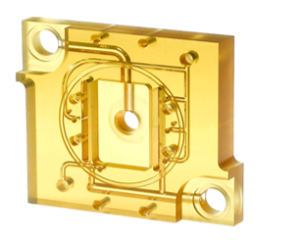
Detailed Description: Mold Parts Processing Methods and Technologies
Today we will share professional knowledge about mold parts processing methods and technologies. Many customers are not familiar with mold parts manufacturing processes. Mold parts are mainly produced by milling, grinding, planing, special machining and CNC machining. Let’s take a detailed look at these professional processing solutions.
Common Processing Methods of Mold Parts
- Milling Processing: Uses professional milling cutters to process flat surfaces, contours and complex shapes of mold parts efficiently.
- Grinding Processing: Adopts high-precision grinding wheels to grind workpiece surfaces, ensuring high smoothness and dimensional accuracy.
- Planing Processing: Uses planer tools to process plane surfaces, grooves and linear shaped structures of mold workpieces.
- Special Machining: Achieves material forming by using electric energy, chemical energy, laser energy and other non‑mechanical energy.
- CNC Machining: Controls machine tools through digital programs to realize precise relative motion between workpieces and cutting tools, producing high‑precision mold parts with stable quality.
Key Processing Technologies of Mold Parts
- Geometric Shape Accuracy
Geometric accuracy including roundness and cylindricity must be controlled within the specified tolerance range. For high‑precision mold parts, additional independent tolerance requirements can be marked on the design drawing. - Surface Roughness
Different working surfaces require different surface roughness values. With the improvement of machine speed and precision requirements, the surface roughness of precision mold parts will be controlled to a smaller level for better performance and service life. - Dimensional Accuracy
As the core functional surface of mold parts, journals and key matching surfaces feature high dimensional accuracy requirements. The diameter accuracy is usually IT6~IT9, and ultra‑precision mold parts can reach IT5 level. - Positional Accuracy
It mainly includes coaxiality, radial runout and perpendicularity. High‑precision mold shafts require 0.005~0.01mm runout tolerance, while ordinary precision shafts require 0.01~0.03mm. Strict positional accuracy ensures stable assembly and long service life of mold parts.